The Fish People Place Lab - Current Community
(listed from newest to most established)
-
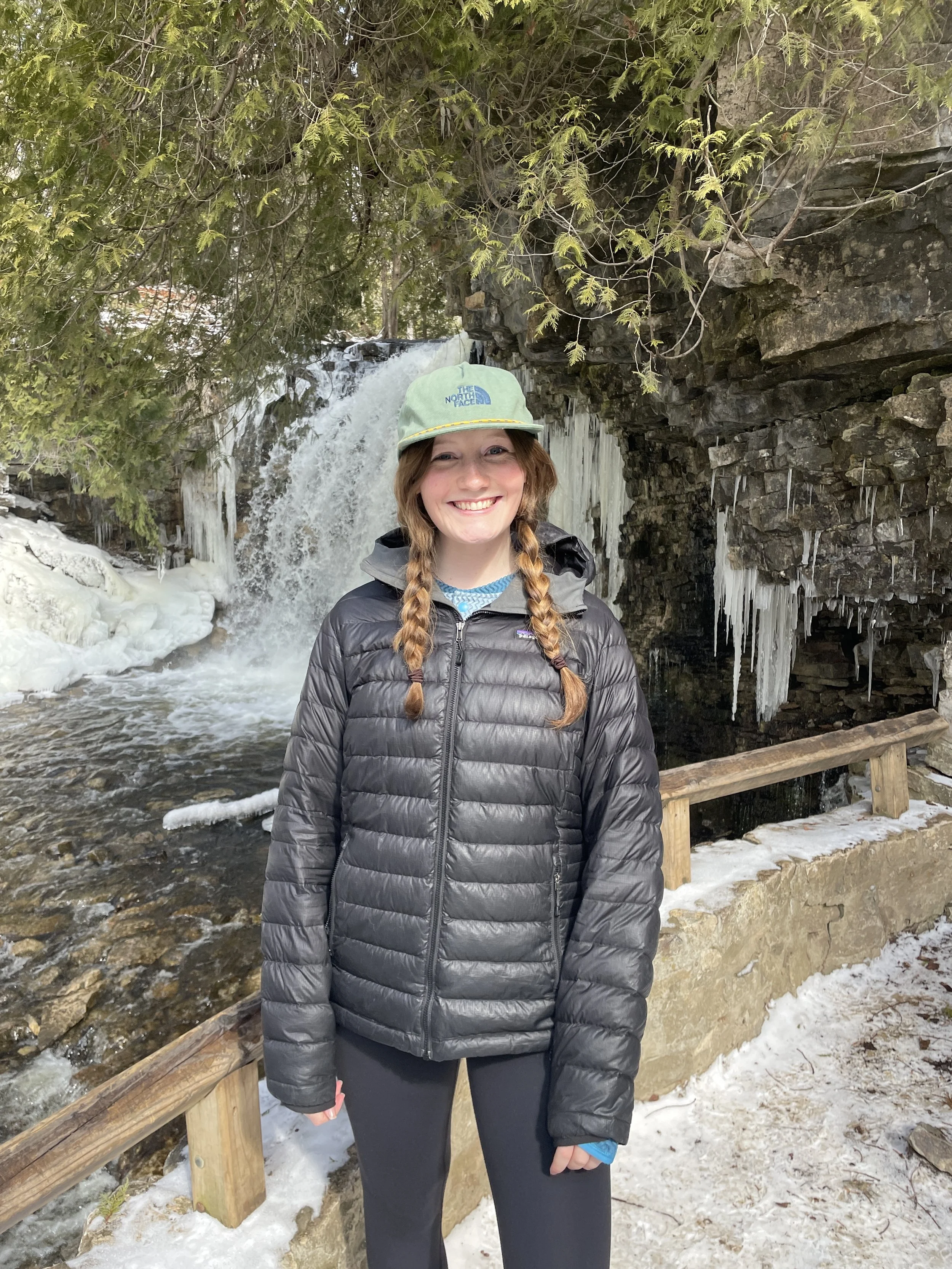
Zoey Maclean-Howard (she/her)
Zoey is a 2026-2027 Master of Marine Management candidate at Dalhousie University. She is from the traditional lands of the Missaussaugas of the Credit First Nation (Toronto, Ontario), and has spent 18 summers canoeing through the traditional territory of the Anishanaabe in Algonquin Park where she grew to love and appreciate the outdoors.
She holds a Bachelor of Science in Marine Biology from Dalhousie University with certificates in Indigenous Studies and Environmental Impact Assessment. Over the course of her undergraduate studies Zoey gained a strong scientific foundation in marine ecology and conservation systems while continuing to question the sociocultural factors within environmental management. Outside of school, Zoey enjoys reading, knitting, and getting outside with friends.
Her research interests include community-based conservation and marine ecology, which led her to enrol in the MMM program due to its focus on sustainability and community partnerships. Her work with the FishPeoplePlace lab will focus on accessibility and longevity of food fisheries within the Saugeen Ojibway Nation’s fishing community in Georgian Bay, Ontario. Through this research partnership with SON, she hopes to evaluate pathways for improving equitable and sustainable access to the SON fishery.
-
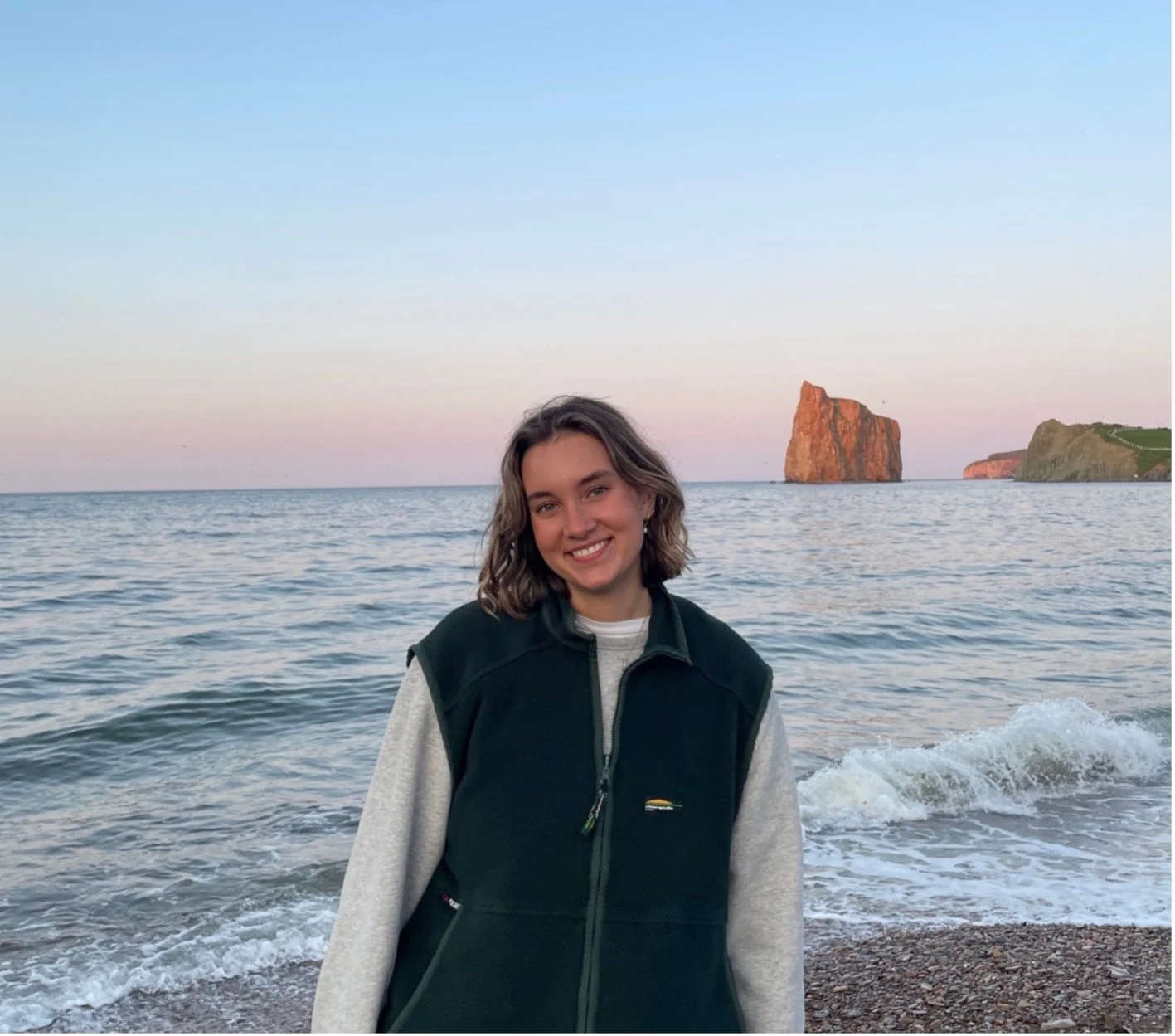
Raphaëlle Boivin (she/elle)
Raph is a 2025-2026 Master’s in Marine Management candidate at Dalhousie University. She moved to Nova Scotia in September of 2025, after finishing her B. Sc. in Geography from Laval University, in Québec City. She is from the traditional and unceded lands of the Anishinaabe (Gatineau), in the province of Québec. She grew up with a love of nature and has partaken in outdoor activities all throughout her life, contributing to her passion for conservation and sustainability.
Through different work and research experiences, Raph grew particularly interested in food sustainability and the impacts that food consumption choices can have on our environments. Her undergraduate research focused on local food systems in the Québec city region, and how eco-citizenship can encourage individuals to protect their environment through their food choices. Looking to expand her horizons and to connect her interests with her passion for the ocean, she joined the Master’s in Marine Management last year. Outside of her studies, she is an avid knitter, loves cooking and looks forward to exploring the Maritimes and its beautiful landscapes.
This summer, Raph will be doing an internship with DFO and OceanWise, and developing a graduate project with OceanWise and the FishPeoplePlace lab. Her research will focus on understanding seafood consumers’ levels of understanding and trust of ecolabelling, more specifically in Atlantic Canada. Co-supervised by Scott McIlveen from OceanWise and Dr. Hannah Harrison from Dalhousie University, this research could help better understand the influences on seafood consumption choices and how to facilitate access to sustainable seafood products.
-
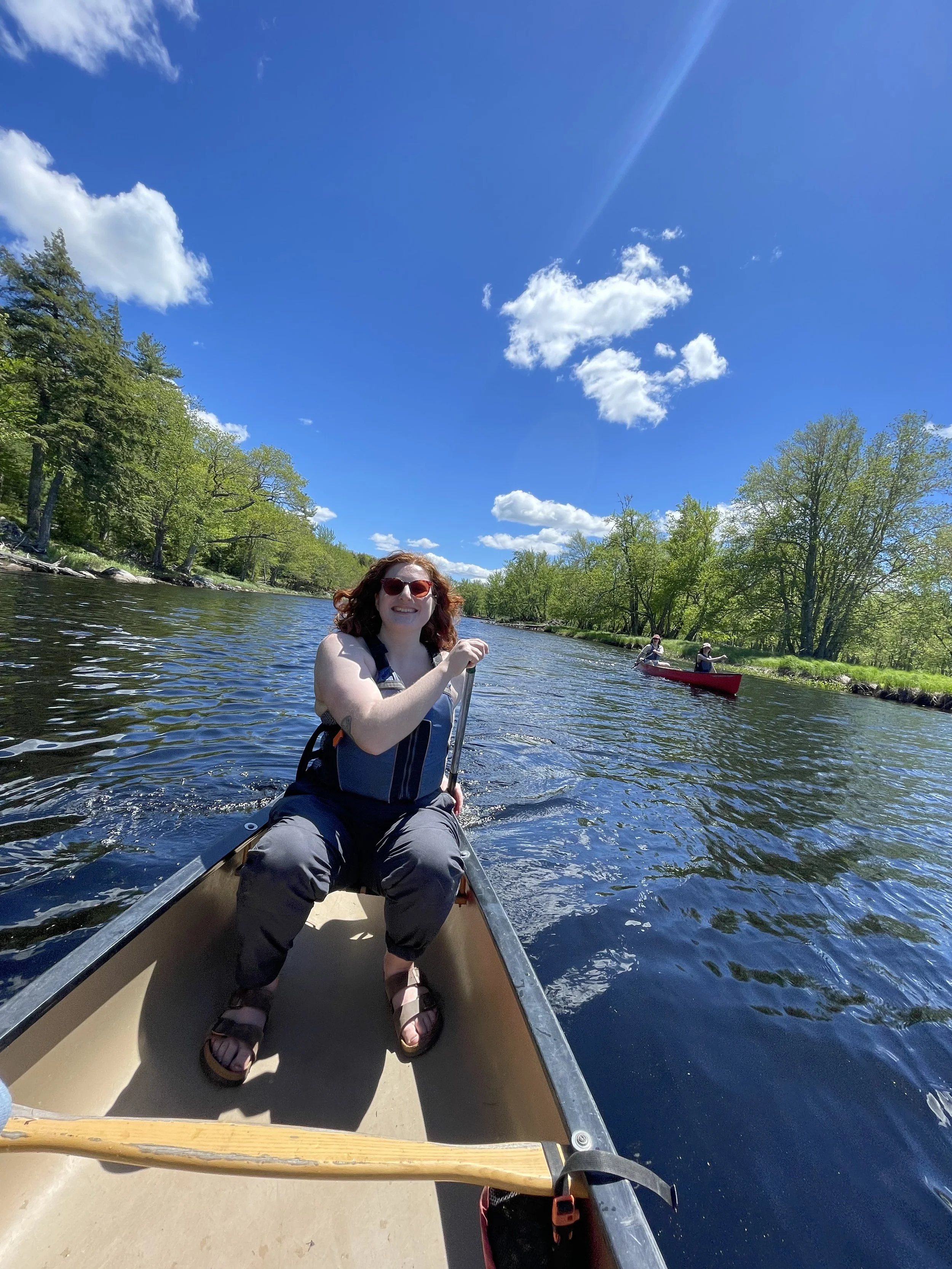
Alexandra Hancock (she/her)
Alex is a graduate student with the Master of Marine Management program at Dalhousie University. Growing up in Mi’kma’ki, the traditional and unceded territory of the Mi’kmaq people, has given her a deep appreciation for the ocean and the marine habitats that are found throughout this beautiful area. After becoming involved with the Clean Annapolis River Project as a youth volunteer, she developed a passion for research science and community involvement in conservation.
She holds a BSc (co-op, hons.) in Marine Biology from Dalhousie University, with a minor in Ocean Science and a certificate in Geographic Information Science. During the course of this degree, she was privileged to be exposed to a wide range of subject areas and knowledge types, gaining an appreciation for the multifaceted nature of many modern marine-centric issues. This prompted her interest in marine management, eventually leading to her enrolment in the MMM program. Outside of her research, Alex enjoys being in the great outdoors, preferably in a canoe, or taking shelter inside with her knitting and a good book. She may also be found in the zoology collections of the Nova Scotia Museum, where she holds an internship.
Alex’s work with the FishPeoplePlace lab will focus on the state of coastal access in the province of Nova Scotia, supported through an internship with Kingsburg Coastal Conservancy. In this role, she is excited to further explore challenges relating to coastal access and it’s management. Supervised by Dr. Hannah Harrison and Dr. Patricia Manuel, she hopes to contribute to our broader understanding of access-related issues and enable more equitable access to coastal area.
-
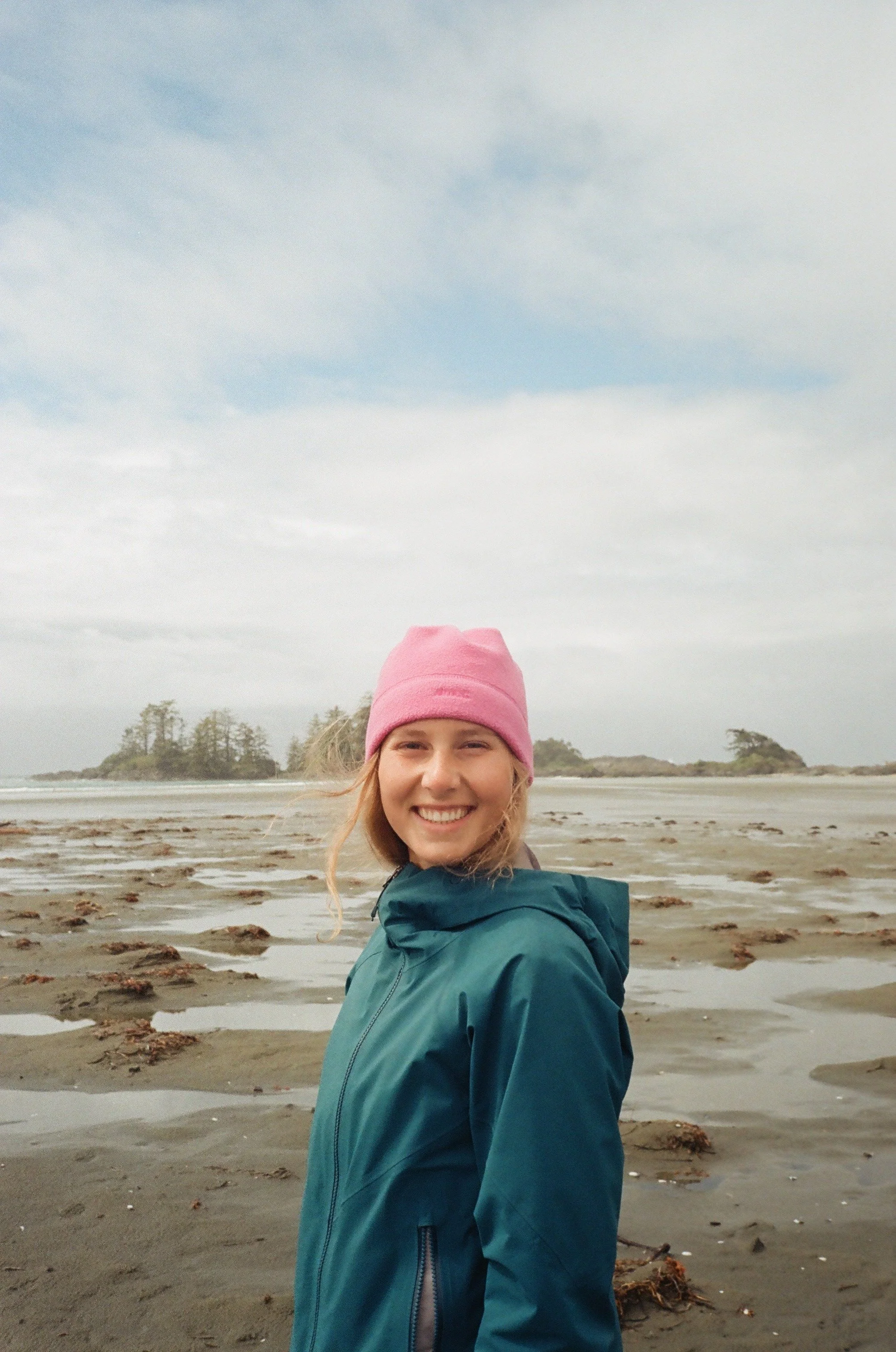
Lily Orlando (she/elle)
Lily is a 2025-2026 Master of Resource and Environmental Management student at Dalhousie University. She is from the traditional and unceded land of the Wolastoqiyik (New Brunswick), where she grew up swimming in and canoeing along the Meduxnekeag River. Spending time outdoors shaped her interests and ultimately led her to pursue studies and a career closely tied to it.
After completing her undergraduate degree double major in Environment, Sustainability, & Society and French at Dalhousie University, she worked as a sea kayak guide on both the west and east coasts of Canada. While living on the west coast and a witness to the protests against open-net pen salmon farming in Clayoquot Sound, she discovered her passion for fostering community connection through marine protection. Back on the east coast, she saw first-hand the vital role marine environments play in Atlantic Canadian communities and is eager to explore this further through her research.
Her research interests include community-based resource management and strengthening connections between coastal communities and seafood systems. She is particularly interested in collaborative, community-engaged research that brings together Indigenous knowledge and lived experience to support more just and sustainable ocean futures. Outside of her research, she enjoys spending time on the water, running coastal trails, and working on knitting projects.
Lily will be working with the FishPeoplePlace Lab and interning with the Ecology Action Centre as part of an EAC/Mitacs funded partnership. She will create an inventory and map of seafood harvesters and producers in Canada who sell their catch locally through alternative seafood models. Working alongside Hannah Harrison, Christina Callegari (Ecology Action Centre), and the Local Catch Canada Network, she hopes to better understand and help strengthen connections among small-scale seafood producers and their communities.
-
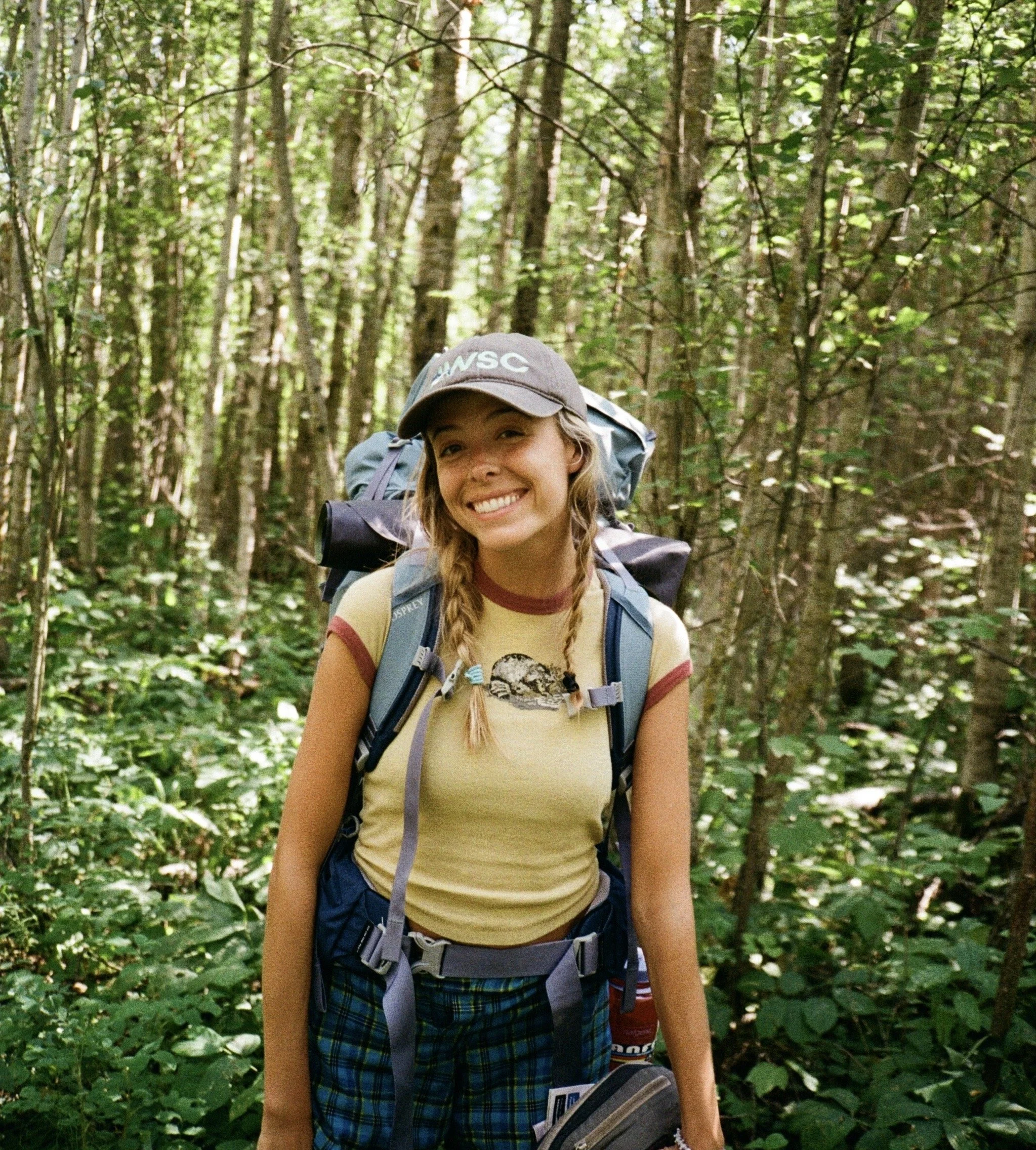
Eliza Preston (she/her)
Eliza is a 2025-2026 Marine Management Master's candidate at Dalhousie University, starting her degree in September 2025. She grew up on the traditional lands of the Mississaugas of the Credit First Nation, in Tkaronto (Toronto), and spent 15 summers of her early life north of the city at a summer camp, teaching outdoor skills to children.
She holds a BSc in Marine Biology from Dalhousie University. Throughout her education, Eliza learned about the importance of marine conservation and the intersection between humans and marine animals. Attending the International Marine Protected Areas conference in 2023 as a youth representative and witnessing the engagement of leaders for the future of ocean governance, Eliza was introduced to the world of marine management. This experience propelled her to enrol in the MMM program. Her research interests include adaptive stewardship models for conservation, collaborative management, and human-animal relationality. Outside of school, Eliza loves backpacking, canoe camping, reading and is a big foodie.
Working in the FishPeoplePlace lab, Eliza’s research will examine the human dimensions of the Salmon Enhancement Program in British Columbia as part of the Salmon Futures Project. She will seek to understand and analyze the social benefits and cultural values that occur due to the cultivation of Pacific salmon in hatchery and stocking programs in BC. By understanding the human dimensions, her work aims to support more holistic and equitable recovery strategies for Pacific salmon. Eliza will be co-supervised by Dr. Hannah Harrison at Dalhousie University and Dr. Valerie Berseth at the University of Toronto and will be funded through the DFO SEP program. Through this work, she is hopeful that she will be able to bridge a gap between conservation and community well-being in Pacific salmon conservation and enhancement.
-
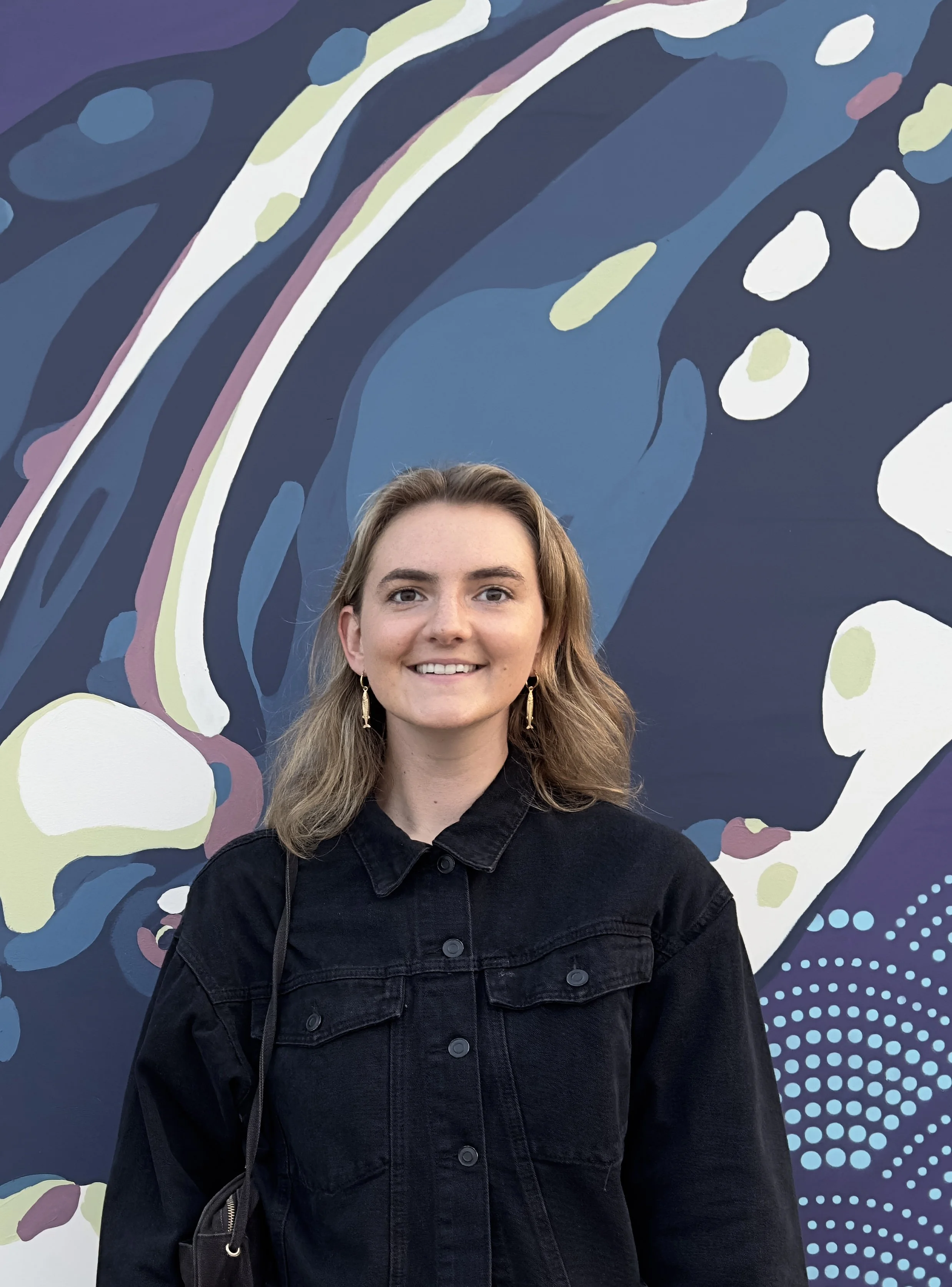
Rachel Bratton (she/her)
Rachel Bratton is an interdisciplinary PhD student at Dalhousie University, having started her degree in May 2026. Raised and educated on traditional Massa-adchu-es-et lands (now called Massachusetts), she holds a B.S. in Environmental Science from the University of Massachusetts Amherst and a M.S. in Environmental Science from the University of Massachusetts Boston. Rachel began her career in the marine sciences studying seabird and humpback whale ecology in the Gulf of Maine, before pivoting into social science to research the human dimensions of rebounding seal and white shark populations as a master’s student. Since then, Rachel has conducted research with commercial fishermen, recreational anglers, and coastal community members on the U.S. Atlantic coast from New England to Florida. Rachel has previously published articles in Marine Policy, Biological Conservation, Human Dimensions of Wildlife, and Ocean and Coastal Management, and has presented her work at academic meetings and conferences throughout the U.S. and Canada.
Rachel’s PhD will use qualitative and economic research methods to examine demographic challenges in Canadian Great Lakes Commercial Fisheries, with the goal of identifying policy solutions to bolster participation in the fishery among new and young fishers. Her work aims to answer the question How can management support future participation in the Great Lakes Commercial Fisheries to sustain regional seafood systems, livelihoods, and resilient communities? As a PhD student, she is excited to expand her skillset as a social scientist and science communicator in the unique setting of inland commercial fisheries.
-

Sian Borden (she/elle)
Sian is a PhD student in Environmental Studies at Queen’s University, starting her degree in September 2025. Originally from Tiohtià:ke/Montréal, she spent her youth in Black community organizations across the city. Her most recent role is in the Centre for Water Resources Studies at Dalhousie University where she collaborated with African Nova Scotian, Mi’kmaw, and rural communities on climate adaptation and access to safe drinking water. She holds a BA Human Relations, Community Development & Sustainability from Concordia University and a Master of Resource & Environmental Management from Dalhousie University. Her academic and professional careers have been guided by her love for community and the environment.
As an African Nova Scotian & Barbadian woman, coastal issues are close to her heart and led her to pursue a PhD studying small-scale land and sea food systems in African Nova Scotian communities. Sian will be co-supervised by Dr. Kristen Lowitt from the Community Food Systems Lab at Queen’s and Dr. Hannah Harrison from the FishPeoplePlace lab at Dalhousie. She has a strong foundation in community-based research and outreach that will support her exploration of small-scale sustainable food systems. Her community-based mixed-methods approach will investigate the historic and current state of food security, sovereignty, and governance in African Nova Scotian communities. Her work will result in a case study to support improving food policy and sovereignty in African Nova Scotian communities. Outside of school & work, Sian loves to read, write fiction & poetry, hike, and try new cookbooks & restaurants.
-

Nicole Cameron (she/her)
Nicole is an interdisciplinary PhD student at Dalhousie University and Killam Scholarship holder. Born and raised in Moh'kins'tsis/Calgary, Nicole has always had a passion for animals and getting outside. She holds a BSc (hons.) in Zoology from UCalgary and an MSc in Marine Ecology from St. Francis Xavier University. Throughout her education, Nicole has studied on various coasts, including the northwest Atlantic, northeast Pacific, southeast Pacific, and southeast Indian Oceans. Additionally, Nicole has experience working in scientific outreach and outdoor recreation, which has fostered her interest in the intersection between people and the environment.
This led her to pursue an interdisciplinary PhD in the FishPeoplePlace lab at Dalhousie, which merges her interests in aquatic and human ecology and allows her to continue working and learning in Mi’kma’ki/Nova Scotia. During her PhD, Nicole will utilize her strong research and community engagement skills to explore the sustainable management of aquatic invasive species (AIS). Specifically, she will employ a mix of quantitative and qualitative methods to investigate the social and environmental impacts of invasive finfish relevant to inland recreational fisheries. Nicole will collaborate with the Nova Scotia Department of Fisheries and Aquaculture and community organizations with the aim of advising future management decisions regarding AIS and angling.
-

Dr. Hannah Harrison (she/her)
Dr. Harrison is originally from traditional Dena’ina lands (Homer, Alaska) where she grew up in a salmon fishing family, and working on a commercial salmon skiff. Her work and interests evolved from a strong interest in how ecology, biology, and human conflicts come together in fisheries and coastal management problems. Her approach to critical research stems from her inborn propensity to be a professional pain-in-the-butt to authority and power.
By discipline, she is best described as a human ecologist, meaning she is interested in the many facets of human-environmental relationships. Dr. Harrison specializes in qualitative research and applying a critical lens to social-ecological problems, particularly within fisheries and coastal community contexts. Her research philosophy includes a strong commitment to sharign knowledge gained in research back to communities and users/holders of knowledge. As such, her work includes an emphasis on knowledge mobilization such as research-driven podcasts, films, policy briefs, and public-facing reporting.
Dr. Harrison earned her Bachelor of Science (Natural Resource Management) and Master’s of Science (Environmental Ethnography) at the University of Alaska Fairbanks. Her PhD was earned as part of a Marie Sklodowska-Curie Actions ITN at the Norwegian University of Life Sciences. She came to Canada in 2019 as a postdoctoral scholar at the University of Guelph on Haudenosaunee and Anishinaabe territory (Guelph, Ontario). In July of 2022 she joined the Marine Affairs Program at Dalhousie University in Mi’kma’ki (Nova Scotia), where she works as an Assistant Professor in the Marine Affairs Program.
Dr. Harrison’s work and research is in service to managers and communities (including communities of practice). If you have a natural resource topic or problem and are looking for collaboration with a social scientist, please get in touch!
Alumni Community
(listed from most recent to least recent)
-
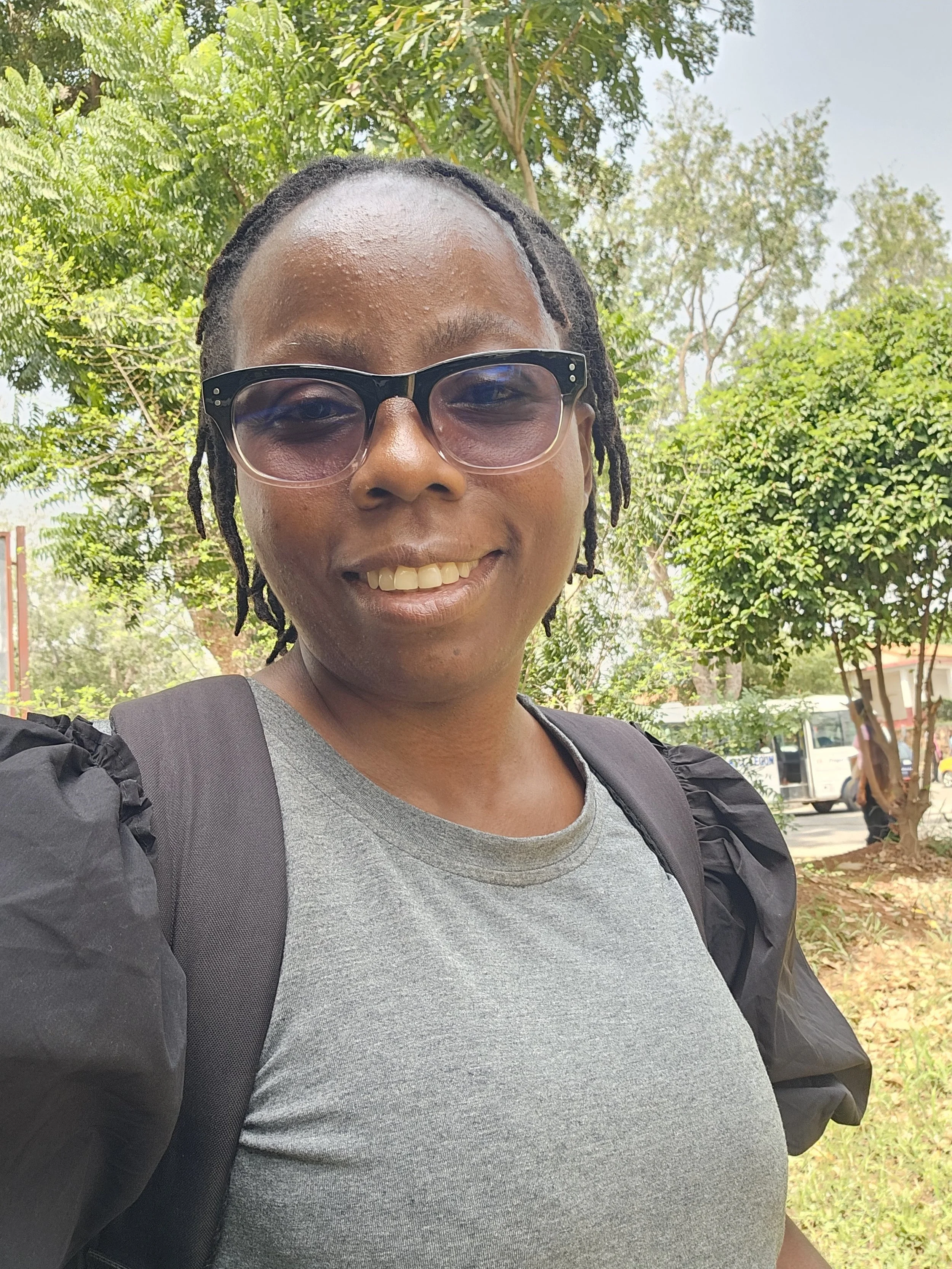
Oreoluwa Grace Fayemi (she/her)
Grace is a PhD candidate in Applied Agricultural Economics and Policy at the University of Ghana. She holds an MSc and a B.Agric in Agricultural Economics from Obafemi Awolowo University, Nigeria. Grace was a visiting scholar in the FishPeoplePlace Lab from April - August, 2026.
Her research focuses on aquaculture value chains, food security, and sustainable diets among smallholder fish farmers in Sub-Saharan Africa. She is particularly interested in understanding how participation beyond production, such as processing and market engagement, shapes household livelihoods, dietary diversity, and nutrition outcomes.
Drawing on her background in agricultural economics and field-based research, Grace uses survey data and quantitative methods to examine how knowledge, attitudes, practices, and agency influence food system outcomes. Her work contributes to policy-relevant discussions on improving food security and promoting sustainable food systems in developing country contexts.
-

Sinead Addis (she/her)
Sinead was a 2025/2026 Master of Marine Management candidate at Dalhousie University. Growing up in South Africa, Sinead spent her summers at the beach or in the African bush, sparking a deep-rooted passion for conservation and ecology. In 2023, Sinead completed a Bachelor of Science (Hons.) at Trent University earning a joint major in Biology and Environmental & Resource Science with a specialization in Conservation Biology. Recently, her travels to Mozambique and the Caribbean prompted her interest in marine management and conservation. This led Sinead to pursue the Master of Marine Management Program.
Working in the FishPeoplePlace lab, Sinead interned for the Margaree Salmon Association with funding support from Mitacs. Sinead’s research focused on aquatic invasive species management strategies in the Margaree River watershed. You can read her graduate project here. Sinead now works as the Operations Manager for the Jijuktu’kwejk Watershed Alliance.
-

Anthea Fleming (she/her)
Anthea was a 2025/2026 Master of Marine Management candidate at Dalhousie University. Growing up in Switzerland, Anthea gained an appreciation for the outdoors going on hikes and ski touring on the weekends with her family. In 2023, Anthea earned her Bachelor of Arts & Science in Geography and Environmental Sciences from McGill University. Her travel to Barbados during her undergrad for a field project, prompted her interest in marine management, conservation and scientific diving. Post-graduation Anthea went to Indonesia to study elasmobranchs and their migration patterns and take part in coral health monitoring and conservation. These projects led Anthea to pursue the Master of Marine Management Program.
Anthea joined the FishPeoplePlace Lab as a graduate student researcher looking at assessing coastal access in Nova Scotia by creating a map of land use changes on ArcGIS. The project assessed the challenges of regulating and preserving access to coastal areas while balancing private landowners' rights with public needs, and addressing any equity and environmental concerns. You can read the final project here.
-
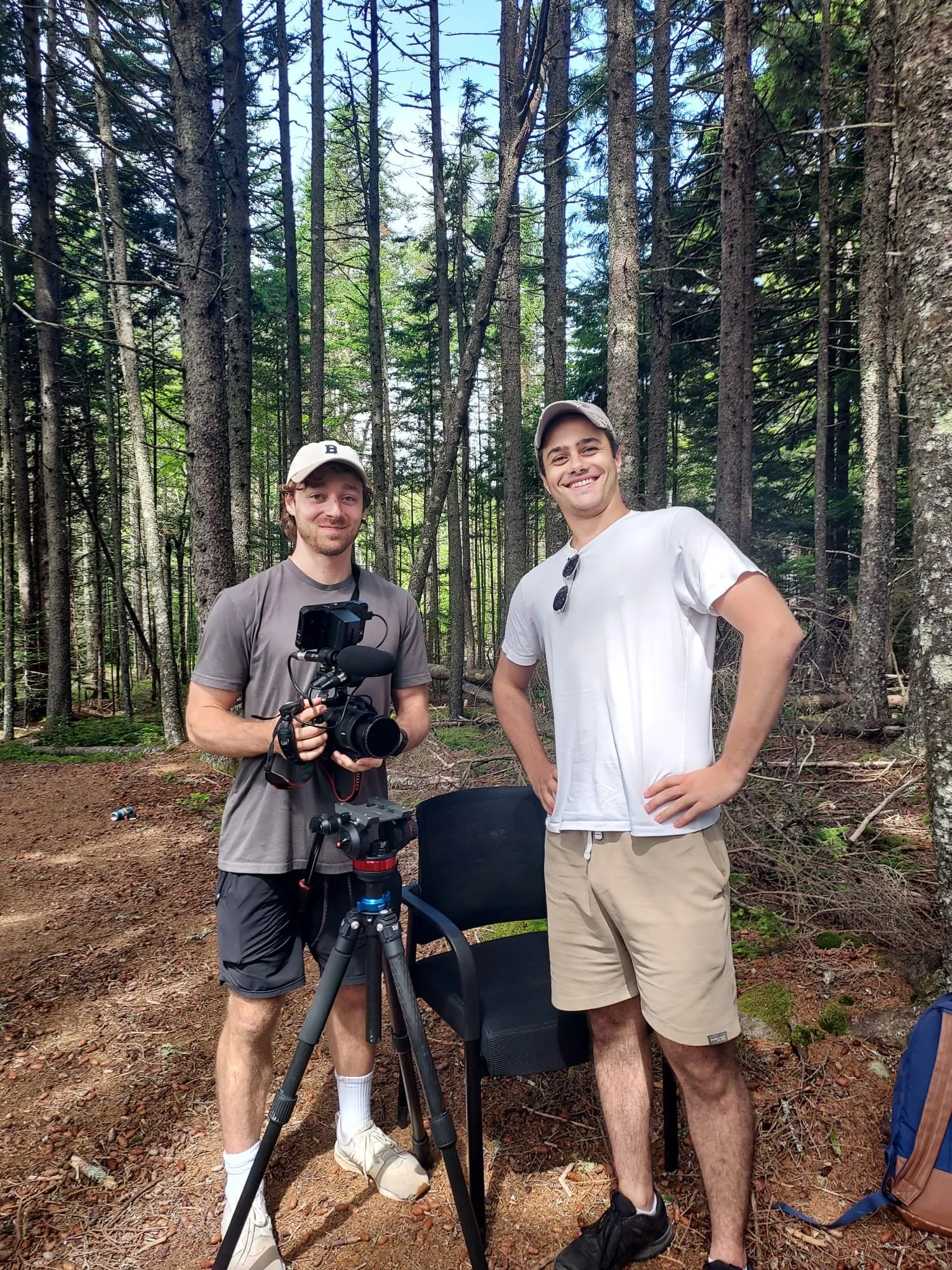
Danilo Piljevic (he/him)
Danilo was a 2025/2026 Masters of Marine Management candidate at Dalhousie University. Originally from Toronto, Danilo has pursued a variety of interests from biology to acting and developed a passion for nature through exploring the wild areas of Ontario. After completing a BSc (hons.) in Animal Behaviour at the University of Western Ontario in 2023, Danilo looked to further his education emphasizing the interdisciplinary nature of his interests.
This led Danilo to the Master of Marine Management Program and an internship in the Fish People Place Lab where he combined academic training with community-engaged experiences through an internship with Cloudberry, a co-management film company. Danilo’s graduate work focused on filmmaking and how documentary films are shaped through representation in on-screen and creative team identities. Post-graduation, Danilo continues to work for Cloudberry Connections.
-
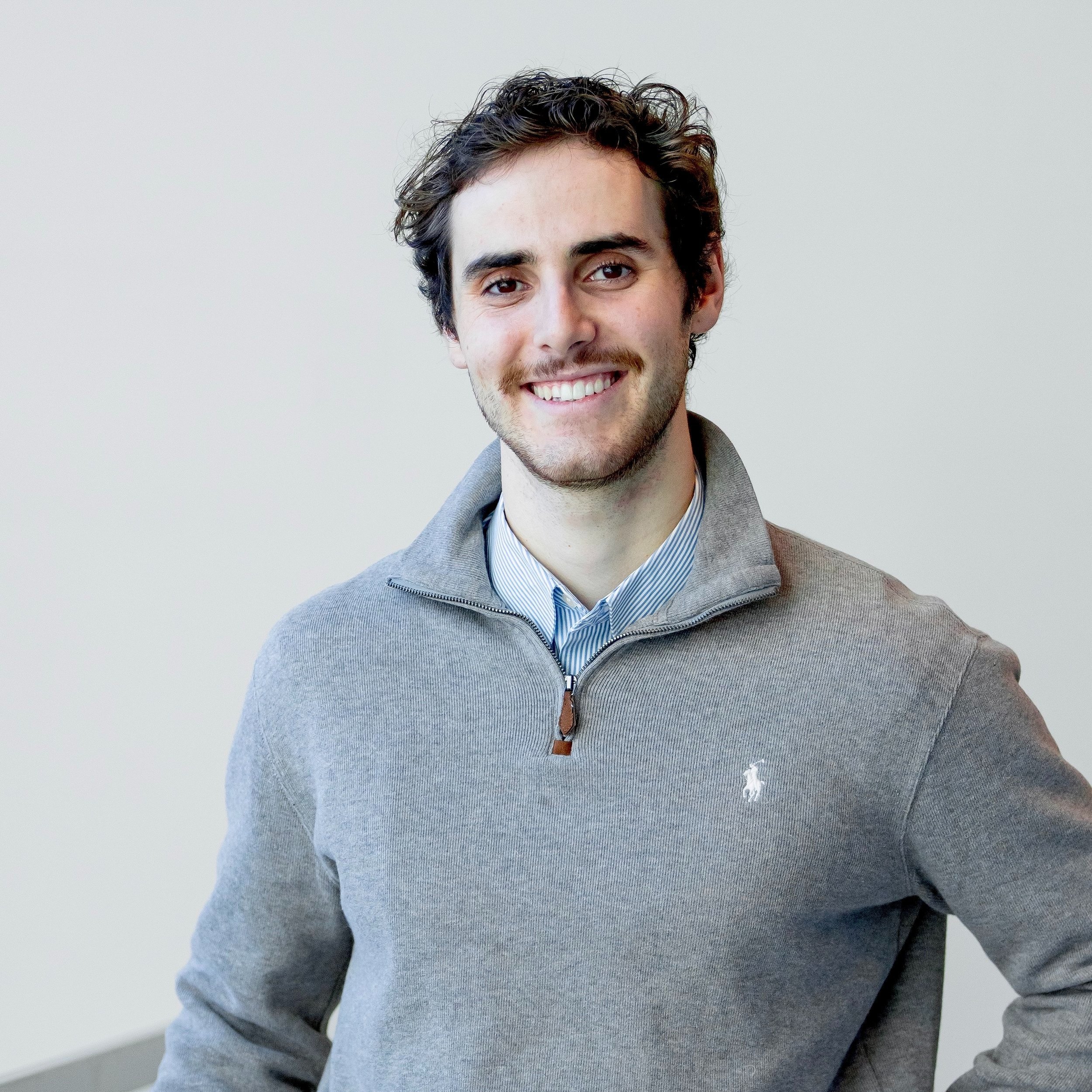
Michael Fabiano (he/him)
Michael was a 2024/2025 Master of Marine Management candidate at Dalhousie University. Growing up in Toronto, Michael gained an appreciation for the outdoors and aquatic ecosystems through weekend camping and fishing trips with his dad and siblings. This enthusiasm seamlessly transitioned into Michael's academic journey during his undergraduate years. In 2022, he successfully earned his BSc (Hons.) in Biology with a minor in Geography from Queen’s University.
One of Michael’s research interests is salmonid species, in their ecology and biology, but also in the importance they hold for people. As such, Michael has joined the FishPeoplePlace Lab as a graduate student researcher on the “Tilling Wild Waters” project. This project aims to understand the underlying motivations and values within communities who stock Atlantic salmon in the Maritimes. Through understanding their “why”, policy can be shaped to incorporate these human dimensions when considering the future of Atlantic salmon conservation measures. You can read his graduate project here. Michael now works as the watershed coordinator for the Margaree Salmon Association.
-
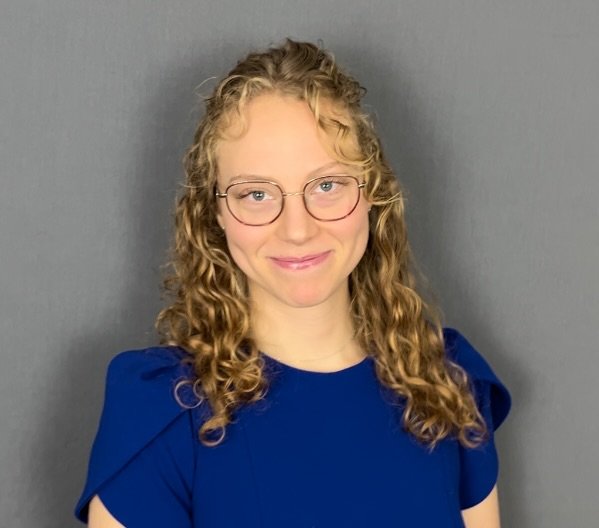
Cara Cripton-Inglis (she/her)
Cara was a 2023-2025 Master of International Development Studies candidate at Dalhousie University. As an interdisciplinary program, the International Development program allows students to branch into many different sectors. This has allowed Cara to bridge her love an interest in coastal spaces with her passion for social justice, social-ecological connectivity, and climate adaptation by joining the FishPeoplePlace Lab. Her Bachelor’s degree in Global Resource Systems from the Faculty of Land and Food Systems at the University of British Columbia (conferred in May 2023) has inspired her to pay special attention to the response of the food system and food system workers to the themes in her thesis research.
Cara’s experience working in Search and Rescue for the Canadian Coast Guard exposed her to the interface between the sea-going people of the maritime provinces and the ocean, and evoked a deeper questioning of how this connection affects the ways that people along the coast are adapting to the changing climate (including erosion, increased storm frequency and severity, flooding, etc.). She successfully defended her thesis in March, 2025. You can read her final thesis here.
-

Ireland Moro (she/her)
Ireland was a 2024-2025 Master of Marine Management candidate at Dalhousie University. Although she grew up far from the ocean in Calgary, Alberta, her love for the marine environment was fostered by vacations to the coast and Blue Planet documentaries. This passion drove Ireland to the University of New Brunswick where she completed her Bachelor of Science in Marine Biology with a minor in Zoology. Her passion for conservation led her to pursue the marine management program as she recognizes that the change she wants to see starts with management.
Ireland’s interest in conservation helped shape her graduate project titled “Examining federal policy surrounding the potential impacts to wild Atlantic salmon from enhancement programs.” She completed her degree in December, 2024. You can read her graduate project work here. Ireland now works for e-Oceans.
-

Abby Christopher (she/her)
Abby was a 2024-2025 Master of Marine Management candidate at Dalhousie University. Hailing from beautiful Prince Edward Island, Abby fell in love with the ocean from an early age. Coming from a coastal community with family members who depend on the ocean for their livelihood, she was able to see firsthand the importance of conserving the ocean to not only preserve ecosystems, but to preserve social and cultural ways of life.
These experiences led Abby to the University of New Brunswick where she graduated with an undergraduate degree in marine biology with honours. During her summers, Abby had the privilege of working for local conservation organizations, enriching her understanding of effective management strategies for harmonizing ecological preservation with societal needs. For her graduate project, Abby worked with the Halifax Port Authority and FishPeoplePlace Lab to examine aquatic ecosystems on or around the port.
She completed her MMM degree in December, 2024 and currently works for the Port of Halifax. You can read her graduate project work here. Abby now works for Research Nova Scotia with the Halifax Port Authority.
-
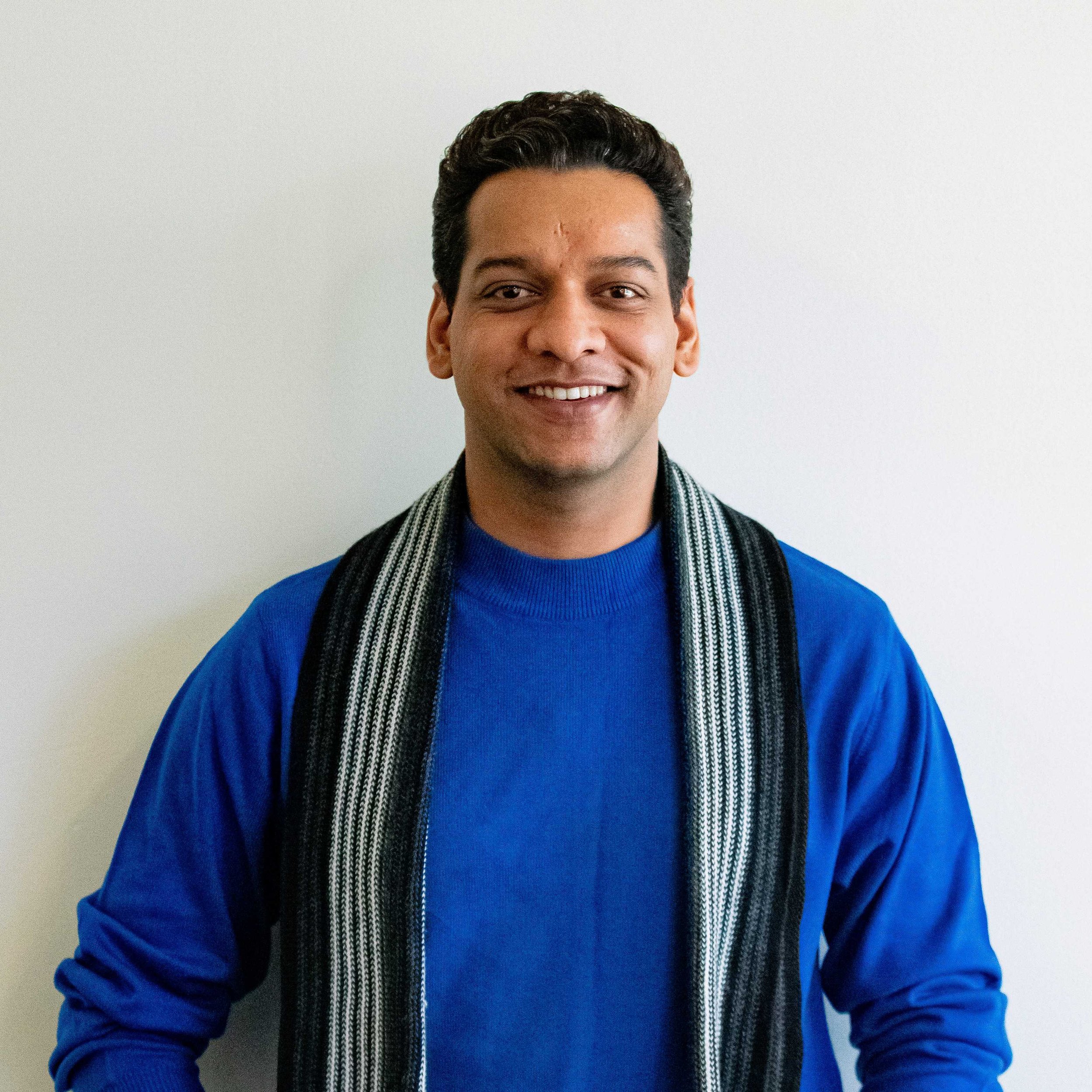
Ojas Gitai (he/him)
Ojas was a 2024-2025 Master of Marine Management candidate at Dalhousie University. Despite growing up in the desert state of India, his early fascination with oceans and ships ignited a passion for marine environments. After earning his bachelor’s degree in marine engineering in 2016, Ojas embarked on a seven-year journey as a merchant naval engineering officer, accumulating invaluable experience at sea.
Driven by his dedication to ocean sustainability, Ojas transitioned into academia to contribute to conservation and sustainability efforts. His graduate project - conducted while interning - focused on gathering data on collaboration, compiling information on participants in multi-stakeholder and rightsholder committees, and employing social network analysis to develop a collaboration network matrix of groups involved in North Atlantic right whale conservation. Ojas completed his MMM degree in December, 2024. You can read his graduate project work here.
-

Katherine Dalby (they/them)
Katherine graduated as a Master of Resource and Environmental Management in May 2024. Growing up in the Greater Toronto Area, their connection to nature was fostered by their close family and community through storytelling, which became a passion for communications and environmental science.
Katherine earned their Bachelor of Science at University of Guelph in Environmental Biology. By integrating her passion for communications and academic background, Katherine has undertaken leadership roles in science communication, focusing on environmental education, public engagement, youth outreach, and social media marketing.
Katherine now works as a policy analyst for the Department of Fisheries and Oceans. -

Brianna Crosby (she/her)
Brianna graduated with a Master of Marine Management in May 2024. During her time in the FishPeoplePlace community, she was a Sobey Fund for Oceans Scholarship recipient at Dalhousie University. She graduated from Mount Allison University in 2022 with a BSc (Hons.) in Biology. Brianna grew up in Nova Scotia – Canada’s ocean playground – which developed into a lifelong love of the sea. She is happiest at the beach, wading through the waves to look for shells and marine life.
Brianna has a keen interest in native species conservation and invasive species management in Atlantic Canada. Her master’s work focused on the green crab, which is found along the shores of each Atlantic province and threatens native species biodiversity and important commercial fisheries. Brianna investigated how Atlantic Canadian green crab fisheries could be used as a form of invasive species management. She completed her degree in December 2023. Click here to read her graduate project.