Internship Dispatch: Lily Orlando
Growing up on the East Coast, seafood has always been a regular part of our most special family gatherings. Whether it was lobster, mussels, or oysters, family dinners often meant sitting around the table, cracking shells by hand, and passing around bowls of melted butter to dip them in. I never really spent much time thinking about where our seafood came from, it just seemed natural to assume it came from the ocean we lived so close to.
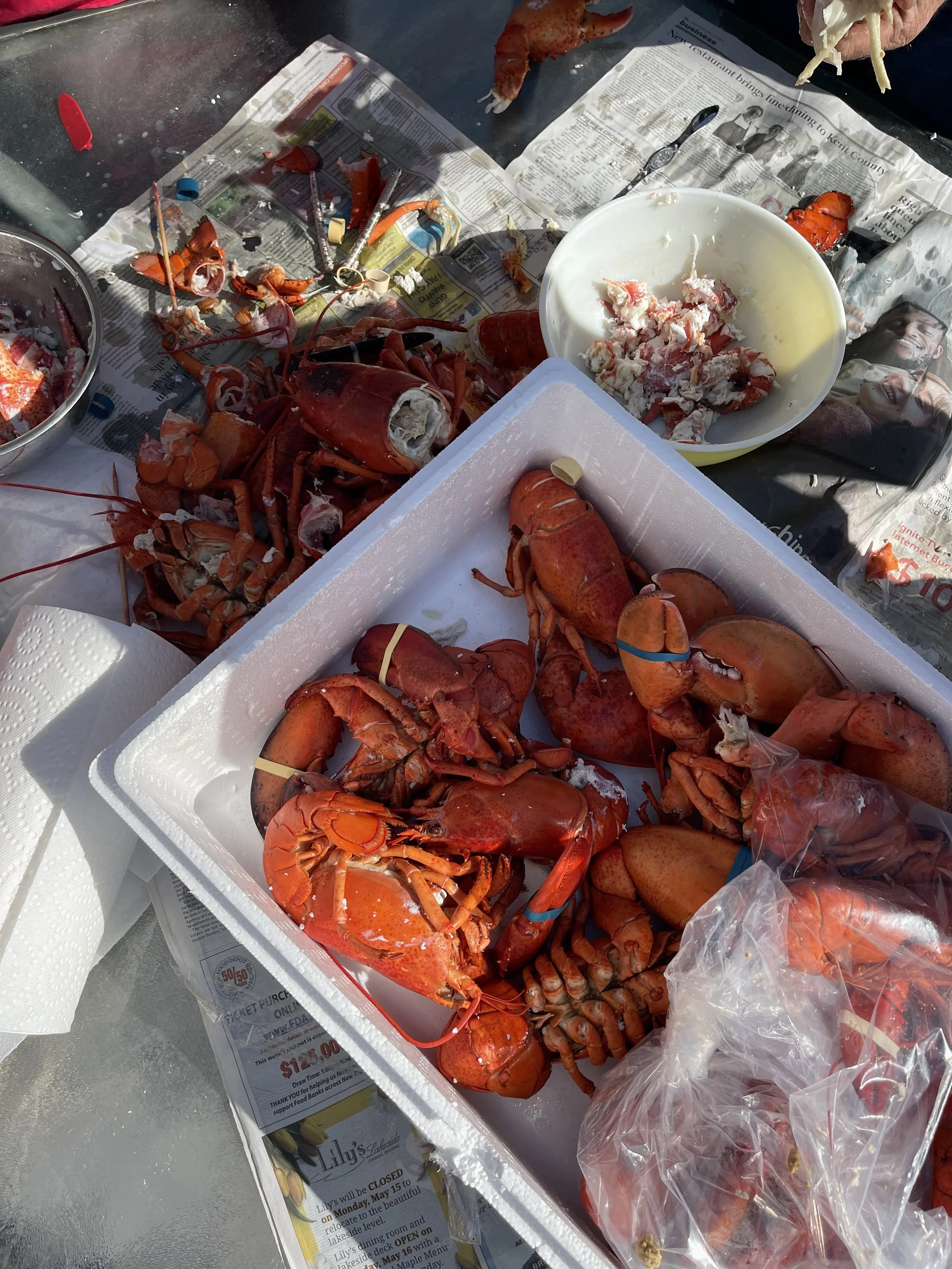
Family-feast lobster night in New Brunswick. Photo by Lily Orland.
It wasn't until my Master's studies that I realized just how disconnected our seafood system here in Canada really is. Approximately 80% of seafood caught in Canadian waters is sent elsewhere to be processed or consumed. The supply chain from the ocean to consumer is not only disconnected, it's messy, confusing, and honestly doesn't make a whole lot of sense. On top of that, much of the seafood sector is made up of large commercial operations, leaving little room for the small-scale harvesters and businesses that catch and sell their products more locally.
When it comes to the fish, shellfish, kelp, and other species caught and consumed in Canada’s oceans and freshwater sources, we're really quite lucky. But for consumers, knowing how to actually find and purchase that seafood can be a challenge. Large grocery store chains often provide limited information about where seafood comes from, making it difficult to know where it's been on its journey from the water to our plates. So, how do we move past the uncertainty and make eating local seafood more accessible?
This summer, I'm working on a project to do exactly that: to illuminate where local seafood can be found. Working with Local Catch Canada, a knowledge-sharing and support hub dedicated to building equitable, community-based seafood systems, I've been gathering information on who is participating in small-scale, direct-to-consumer seafood distribution across Canada. Not only do we want to better understand who these people are, but also where they're located, what products they sell, and how we can foster connections between the small-scale seafood community.
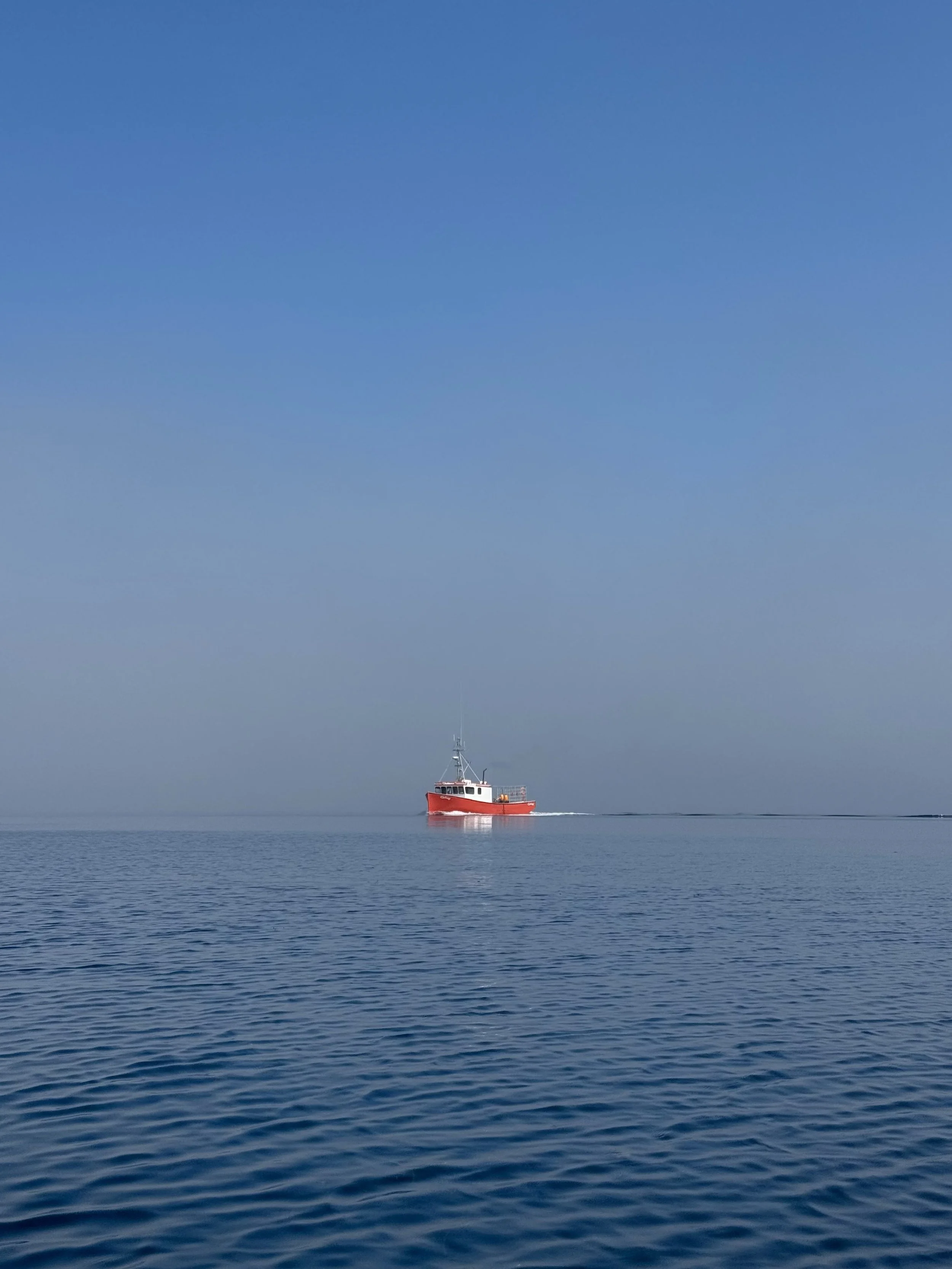
Lobster boat in Lower Prospect seen heading out in the morning fog. Photo by Lily Orlando.
With my internship now well underway and having officially passed beyond the halfway point, I've started reflecting on a few of the successes and challenges I have come across so far.
Successes: One of the biggest things I've realized is that there are far more people providing local seafood across Canada than I initially expected. Whether they're selling directly off the wharf, at a farmers' market, through an online store, or balancing local sales with larger commercial markets, there are many different ways people are getting local seafood into the hands of consumers.
I've also been grateful for how kind, open, and enthusiastic people have been about this project. Just about everyone I've spoken with has been eager to share their experiences or connect me with someone else who might be a good fit. It's been encouraging to see how many people are excited about strengthening local seafood systems and keeping more Canadian seafood in the hands of Canadians.
Challenges: Of course, there have been a few challenges along the way. Since my project overlaps with the busiest time of year for many fishers and harvesters, finding time to connect hasn't always been easy. The other challenge has been finding people who don't have much of an online presence. Many small-scale seafood businesses rely on word of mouth rather than websites or social media, so making those connections often depends on one introduction leading to the next.
Despite these challenges, I am fueled by the generosity of the people I've met and the excitement surrounding this project. With just a month and a half left in my internship, I'm looking forward to continuing to build connections and seeing where this project leads.
I'd like to thank my internship co-supervisors, Hannah Harrison at Dalhousie University and Christina Callegari at the Ecology Action Centre. Thank you both for your encouragement and guidance throughout this project. I'd also like to thank everyone who has taken the time to speak with me or participate in an interview. Your willingness to share your knowledge and experiences is what makes this project possible.