Dispatch from WGENGAGE (ICES)
The The International Council for the Exploration of the Sea (ICES) is an intergovernmental marine science organization formed of 19 member countries (and beyond) that works to meet, societal needs for impartial evidence on the management of seas and oceans within their remit. As part of this work, about 150 working groups operate within the ICES network to provide science-based evidence and advice. One of the newest groups is ENGAGE, a group dedicated to providing both scientific analysis and advice to ICES as to how the organization can better work with stake- and Rightsholders in member states.
I have been serving as the North American co-chair of this group for about 18 months now, and will admit that upon joining this fledgling group I had no real sense of ICES nor how a stakeholder engagement-focused group would operate. Fortunately I have had the absolutely pleasure of working with Dr. Marta Ballesteros, who works as a political scientist at the Spanish Institute of Oceanography. Together with her deep expertise and mentorship and a dynamite working group made of folks from across Europe, it has been a steep but very interesting learning curve in how to facilitate and progress the work of this group, and understand ICES’s work more broadly.
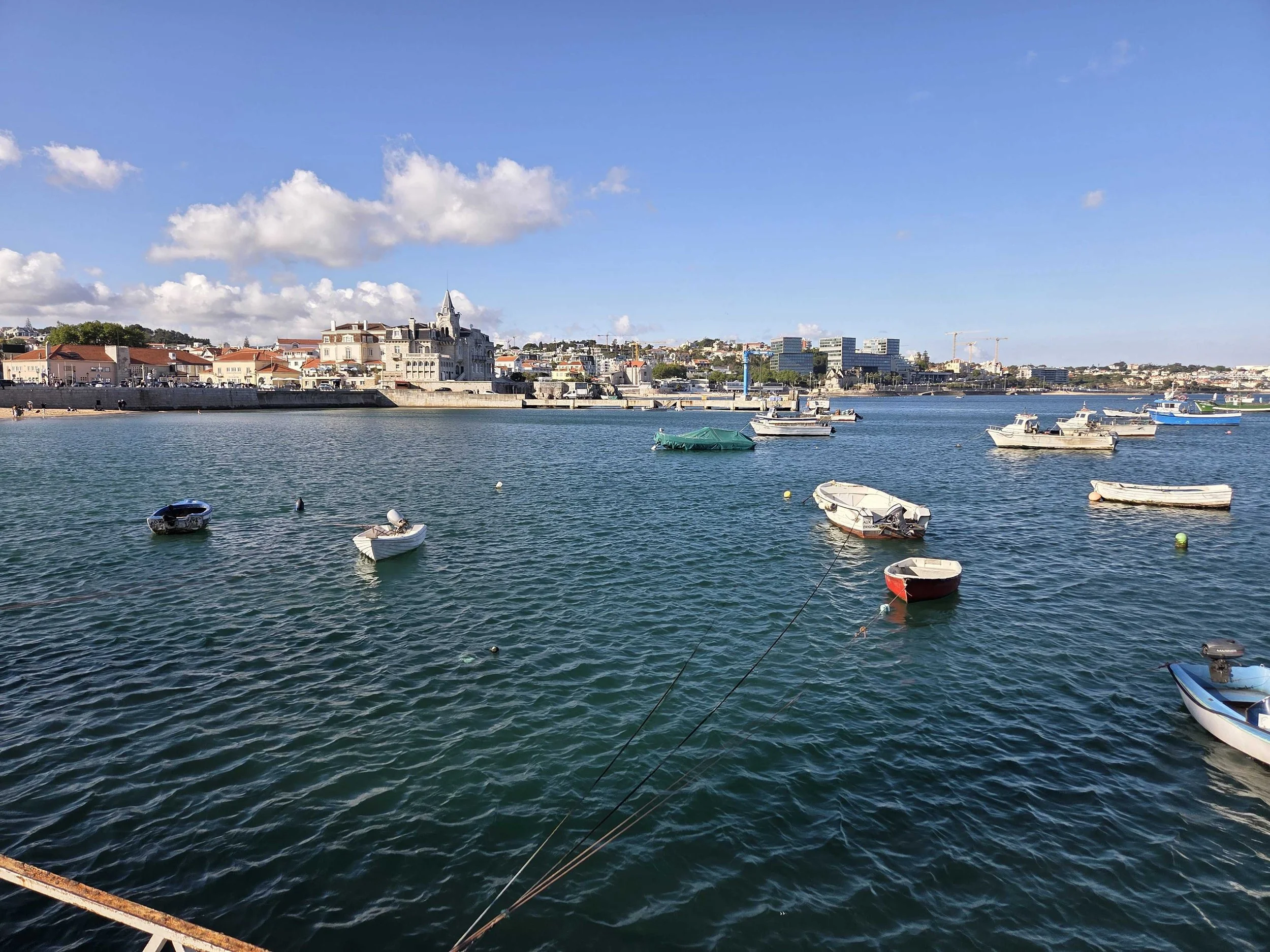
WGENGAGE Meeting in Cascais, Portugal
We recently had our 2nd annual meeting in-person in beautiful Cascais, Portugal. Graciously hosted in Junta de Freguesia de Cascais, our group meet for four days to trial a new training, learn about new concepts, and advance the group’s work through workshops. The event went smoothly from start to finish thanks to the superb organizing by local group member Sónia Seixas (thank you!), including a visit with a local octopus fisherman (a real treat).
There were many highlights over the four days. On the first afternoon the group met to trial a new training session prepared by one of the sub-groups. The training is meant to eventually be available to ICES members who are interested in working directly with stakeholders but perhaps aren’t sure where to start or are still in the process of understanding what stakeholders (or Rightsholders) hold in their knowledge systems. We were able to trial and then debrief on the training design as a group, and I look forward to the next version of the training being available.
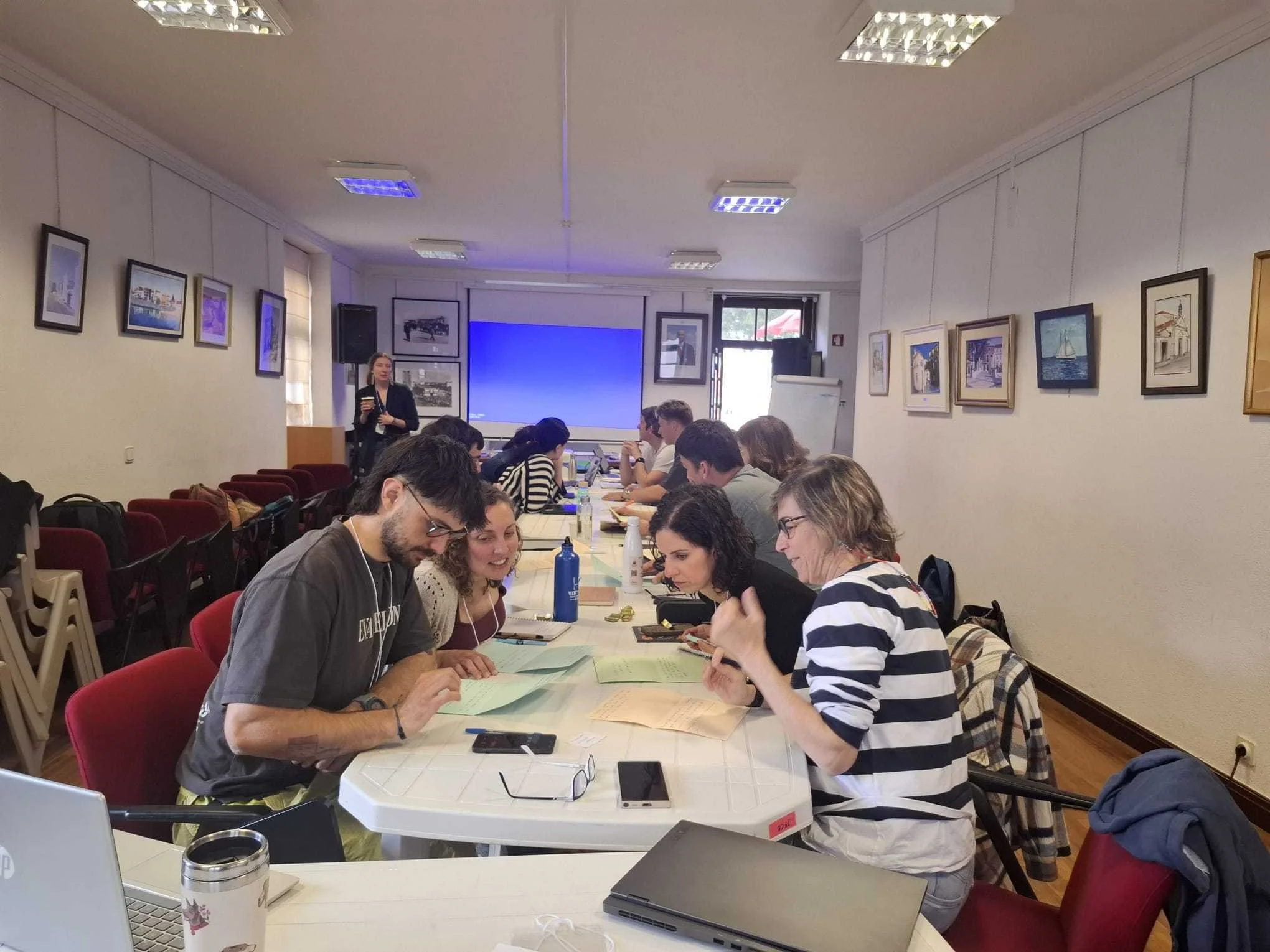
WGENGAGE members hard at work during a workshop
A major highlight for me was giving a brief presentation on the philosophy of science and how it feeds into our understanding of different knowledge systems, including local ecological knowledge or valuing Indigenous Knowledge as western science trained experts. To my great delight we had time to play the “Is It Natural” game - my favourite teaching tool and a very fun exercise to try with mid-career experts. Later, I also really enjoyed working through the ICES Stakeholder Engagement Strategy to see where our group can progress things right away, and how the longer-term goals can also be achieved through our work.
Of course, much more to reflect on but I will wrap up here by saying a big ‘thank you!’ to everyone who was able to join and participate in the meeting. I left tired and with cheeks sore from so much smiling and laughing - a perfect ending to a great few days with WGENGAGE.
- Hannah Harrison, WGENGAGE Co-Chair
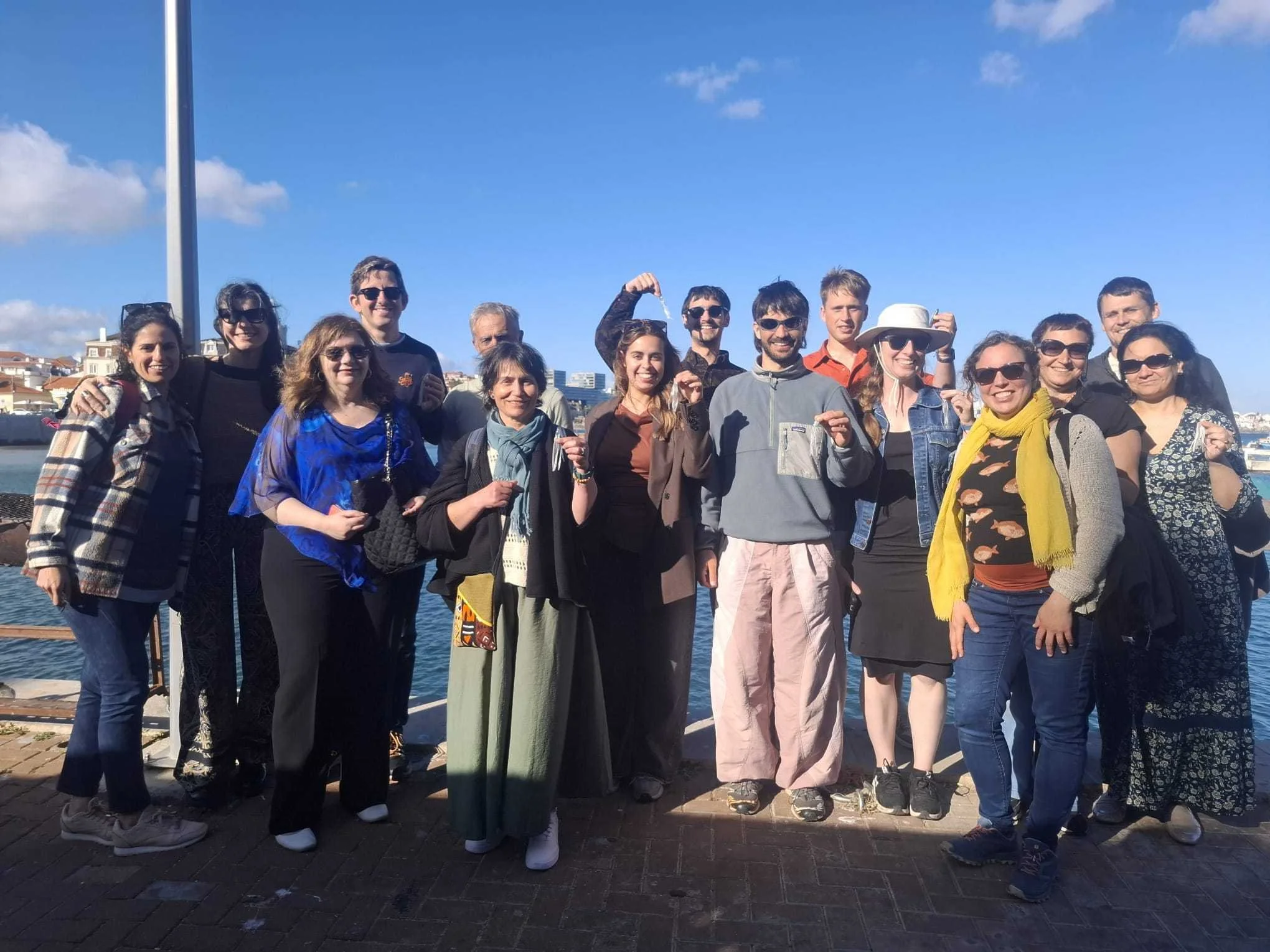
WGENGAGE Members visiting with local fishermen along the Cascais waterfront.