Dispatch from the International Coastal Access Symposium
The International Coastal Access Symposium, hosted March 26th by Nova Scotia’s Coastal Access Working Group, has now wrapped up and as our team is preparing a summary report, I’ve been reflecting on how this first symposium blew through my every expectation and ambition. In short, my hope that a few people would show up was far exceeded and I walked away from the day feeling excited, inspired, and with a renewed sense of dedication to coastal access as both a research and advocacy need.
Symposium logo designed by Lily Hull
The Symposium was attended by 96 registrants throughout the day from time zones around the world. We enjoyed the talents and expertise of nine speakers calling in from Canada, Grenada, Jamaica, New Zealand, United States, and Mexico, all of whom shared a wide breadth of experiences with coastal access, ranging from protected access in California to difficult access plagued by racism, coastal gentrification, and private property conflicts in places like Mexico, Jamaica, and Nova Scotia. I really appreciated how the listening audience engaged with each speaker during the Q&A session following each speaker’s presentation - so many good questions, shared resources, and reflections on the impact of each speaker. Despite the organizing team’s concerns that the virtual format might stifle conversation, the event chat was lively and I concluded the day with a feeling of having talked with many people and gotten a taste of coastal access thinking around the world.
One of the main take-aways for myself, the coastal access working group, and many participants (as indicated by their comments in the event chat) was how shockingly similar the challenges of coastal access were across cases, despite their very diverse locations and governance systems. Why is nearly everyone having the same struggles? What do we do about it?
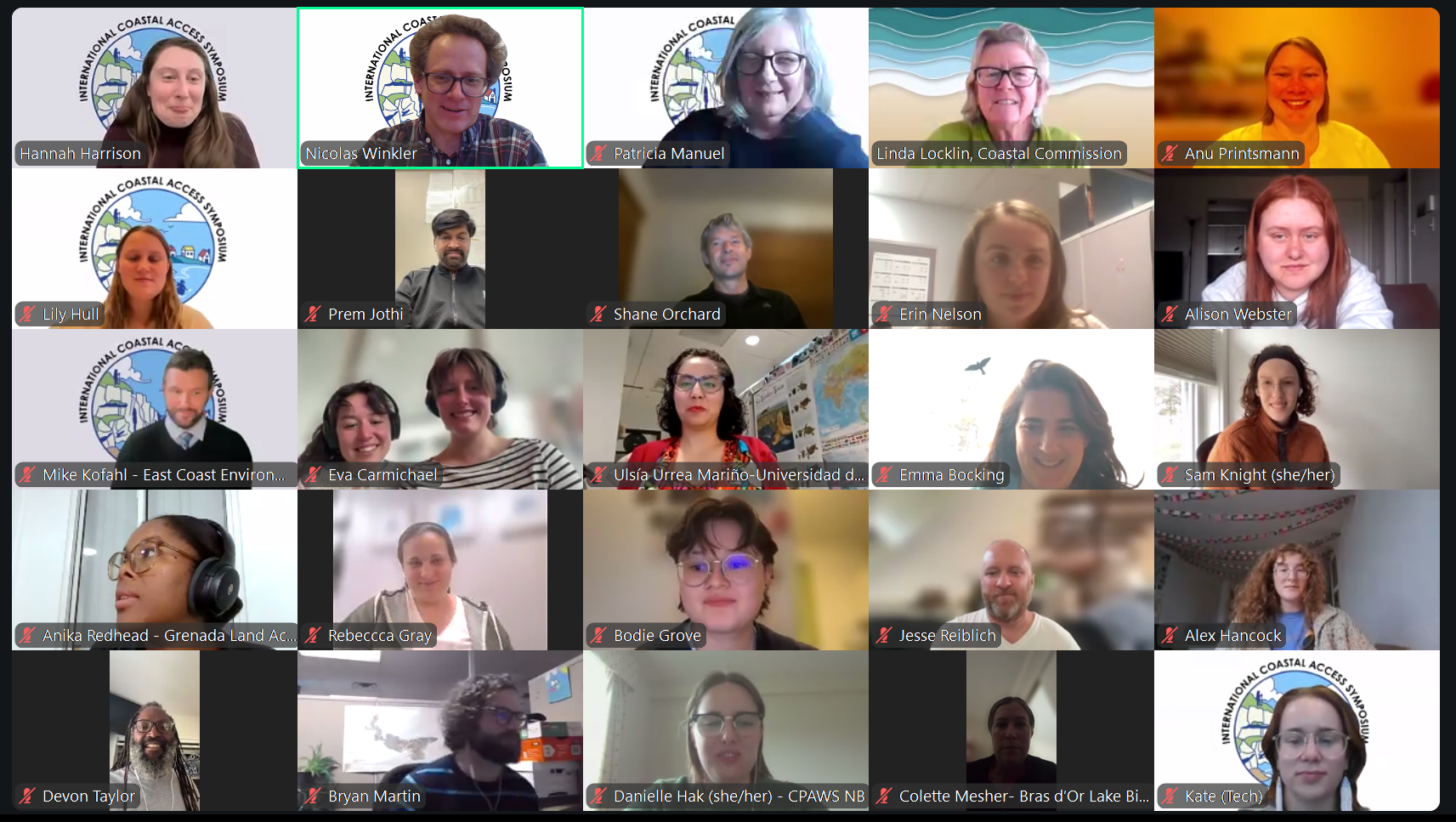
(Partial) Group screenshot of attendees at the end of the day. Thank you everyone for attending!
To begin to address these questions, the symposium has a few upcoming outputs that will hopefully keep the momentum of the symposium going. Forthcoming are video recordings of each session, a summary report of the event, and a survey-based study the FishPeoplePlace lab will be leading to gather together the most pressing coastal access questions had by the registrants for this event and the Coastal Zone Canada coastal access workshop from last year (also hosted by the Coastal Access Working Group).
Overall, the event was really inspiring and expanded my interest and horizons of thought on coastal access. It was especially rewarding to see new connections being made between participants, and I look forward to the next symposium and collaborations in between.
A big, big thanks to Nicolas Winkler, Patricia Manuel, Mike Kofahl, and Lily Hull for their work in organizing the symposium, hosting the sessions, and taking this community to the next step!